


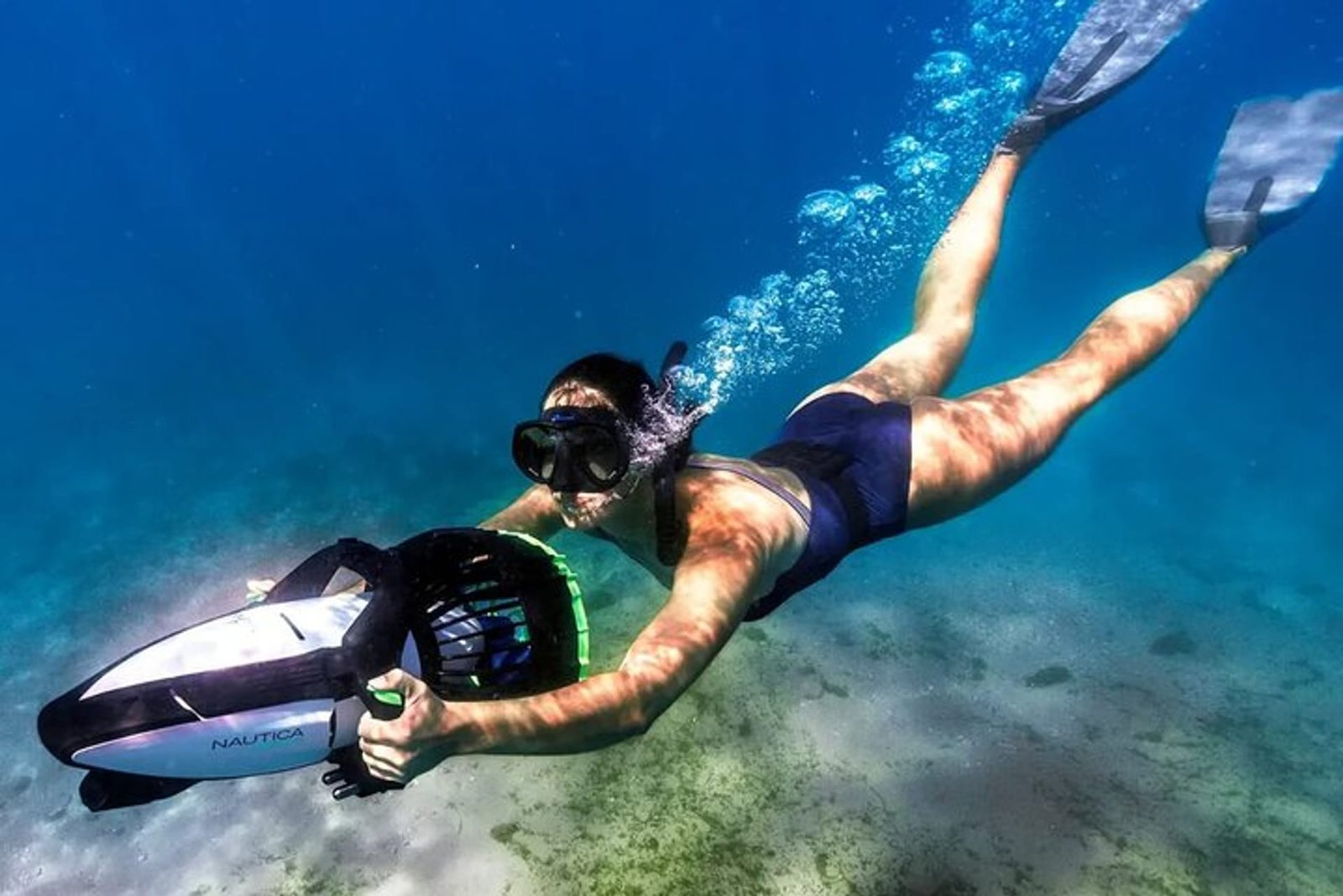
The underwater world has always fascinated adventurers, divers, and ocean enthusiasts. From colorful coral reefs to mysterious marine life, there is an entire ecosystem waiting to be explored beneath the surface. While traditional swimming and diving offer incredible experiences, modern technology has introduced a new way to enjoy underwater adventures: the underwater scooter.
An underwater scooter is a compact propulsion device designed to help divers and snorkelers move effortlessly through the water. By reducing physical effort and increasing mobility, these innovative devices allow users to cover greater distances, conserve energy, and enjoy a more immersive underwater experience.
What Is an Underwater Scooter?
An underwater scooter, often referred to as a sea scooter or diver propulsion vehicle (DPV), is a battery-powered device that pulls users through the water. It features an electric motor and propeller system enclosed within a waterproof housing. The rider simply holds onto the scooter while it generates forward thrust.
Originally developed for professional diving and military applications, underwater scooters have become increasingly popular among recreational divers, snorkelers, underwater photographers, and water sports enthusiasts. Advances in battery technology and lightweight materials have made these devices more accessible, portable, and user-friendly than ever before.
How Does an Underwater Scooter Work?
The operation of an underwater scooter is surprisingly simple. Once activated, the motor powers a propeller that creates thrust, moving the user through the water. Most models are equipped with ergonomic handles and intuitive controls, allowing riders to adjust speed and direction with minimal effort.
Modern underwater scooters often use rechargeable lithium-ion batteries that provide extended runtime. Depending on the model, users can enjoy anywhere from 30 minutes to several hours of underwater exploration on a single charge.
The streamlined design helps reduce drag, enabling smooth movement through oceans, lakes, rivers, and swimming pools. This combination of efficiency and convenience makes underwater scooters appealing to both beginners and experienced divers.
Benefits of Using an Underwater Scooter
Enhanced Underwater Exploration
One of the biggest advantages of an underwater scooter is the ability to explore larger areas without becoming exhausted. Divers can travel farther and spend more time observing marine ecosystems rather than focusing on swimming.
Energy Conservation
Swimming against currents can quickly drain energy, especially during extended dives. An underwater propulsion device significantly reduces physical effort, allowing divers to preserve energy and enjoy longer underwater sessions.
Improved Diving Experience
Whether exploring shipwrecks, coral gardens, or underwater caves, an underwater scooter adds excitement and efficiency to every dive. The ability to glide effortlessly through the water creates a unique sensation that many divers find exhilarating.
Better Underwater Photography
Underwater photographers often use sea scooters to reach ideal shooting locations quickly and maintain stable movement while capturing images and videos. This mobility can help create more dynamic and professional-looking underwater content.
Types of Underwater Scooters
Recreational Underwater Scooters
These models are designed for casual users, families, and snorkelers. They typically feature moderate speeds, lightweight construction, and simple controls, making them ideal for beginners.
Professional Diver Propulsion Vehicles
Professional-grade DPVs are built for advanced divers who require greater speed, depth capabilities, and battery life. These models are commonly used for technical diving, underwater surveys, and extended exploration missions.
Compact Travel Scooters
Travel-friendly underwater scooters prioritize portability. Their lightweight design and compact dimensions make them convenient for vacations, beach trips, and diving expeditions.
Important Features to Consider
When choosing an underwater scooter, several factors can influence performance and overall satisfaction.
Battery life is one of the most important considerations. Longer runtime allows for extended exploration without frequent recharging. Speed settings also matter, as different users may prefer varying levels of propulsion.
Depth rating determines how deep the scooter can safely operate. Recreational users may only need moderate depth capabilities, while advanced divers often require equipment designed for deeper underwater environments.
Weight and portability are equally important. A lightweight underwater scooter is easier to transport, carry, and store. Many modern models are specifically designed with travel convenience in mind.
Safety features such as automatic shutoff systems, propeller guards, and buoyancy control contribute to a safer and more enjoyable underwater experience.
Safety Tips for Using an Underwater Scooter
Using an underwater scooter is generally safe when proper precautions are followed. Users should always familiarize themselves with the device before entering the water. Reading the user manual and practicing in a controlled environment can help build confidence.
Regular equipment inspections are essential. Checking battery condition, seals, and moving components helps prevent mechanical issues during use.
Divers should remain aware of their surroundings, including marine life, underwater obstacles, and changing water conditions. Maintaining proper buoyancy and following established diving practices are equally important.
For beginners, using the scooter under supervision or during guided activities can provide additional safety and support.
Underwater Scooters and Marine Conservation
Responsible use of underwater scooters can support sustainable ocean exploration. By moving efficiently through the water, divers can observe marine habitats with less physical disturbance. However, users should avoid touching coral reefs, disturbing wildlife, or operating too close to sensitive ecosystems.
Respecting marine environments helps preserve underwater biodiversity for future generations. Thoughtful exploration ensures that the beauty of the ocean remains protected while still being enjoyed by adventurers around the world.
Why Underwater Scooters Are Growing in Popularity
The increasing popularity of underwater scooters is driven by a combination of technological innovation and growing interest in water-based recreation. Improvements in battery efficiency, waterproof engineering, and compact design have made these devices more practical and affordable.
Social media, underwater videography, and adventure tourism have also contributed to their rising demand. Many travelers seek unique experiences, and underwater scooters provide an exciting way to interact with the ocean in a memorable and accessible manner.
FAQs
Can beginners use an underwater scooter?
Yes. Many recreational models are designed specifically for beginners and are easy to operate.
How fast can an underwater scooter go?
Speed varies by model, but most recreational units travel between 2 and 4 miles per hour underwater.
Are underwater scooters safe for snorkeling?
Yes. Many scooters are suitable for snorkeling and shallow-water exploration when used correctly.
How long does the battery last?
Battery life depends on the model and speed settings, typically ranging from 30 minutes to several hours.
Can underwater scooters be used in swimming pools?
Yes. Many models can be safely used in pools for practice, recreation, and training.
Conclusion
An underwater scooter opens the door to a new level of aquatic adventure. By combining convenience, efficiency, and excitement, it allows divers and snorkelers to experience the underwater world in a way that feels effortless and engaging. As technology continues to evolve, these innovative devices are becoming an essential companion for anyone who wants to explore beneath the surface with greater freedom and confidence.
